“To pinpoint reasons for the tremendous appeal of striped bass angling is nearly impossible. There are other fish that grow bigger, fight harder, and are more difficult to catch, yet the striper has a fanatical human following that compared to none. No single species has changed the habits of the coastal angler more than this rugged, fascinating, unpredictable prima donna of the sea.” – Unknown
I’ve been wanting to write this for some time. And now, I believe, time can no longer wait – things must be faced and examined through a clear and honest lens. Waiting . . . hoping . . . for Atlantic states fisheries management initiatives to take root and effect change is no longer reasonable. My objective is to spark awareness and some honest thinking on the part of every angler who pursues Atlantic striped bass. I hope the perspective set forth is met with an open mind and considered carefully . . . and objectively. I firmly believe that anglers who love striped bass also hold the power to nudge fate in a positive direction for this Atlantic treasure.
For decades, commercial interests have been tagged with the lion’s share of adverse impact (the blame) when assessing Atlantic striped bass stocks and how to manage the fishery moving forward. A host of non-fisheries interests, too, are often identified for their role in habitat infringement that surely takes a toll on the fish. When stripers began teetering on their most recent decline about 12 to 15 years ago (in my estimation), commercial harvesting may have been a significant factor – there were lots of guys earning what amounted to beer money through the sale of this wildly important game fish. A species with singular value relevant enough to impact coastal economies and the day-to-day happiness of tens of thousands of Atlantic coast recreational anglers. The east coast recreational fishing industry at large has been shaken by the striper’s most recent decline.
Sustenance killing of wild creatures is primordial and the desire to do so is deeply imbedded in the human psyche. Hunting and fishing are likely the second and third oldest professions, which makes a cultural shift away from the primal satisfaction associated with harvesting wild fish difficult. However, some countries, as well as regions of the US with highly valued sport fisheries, have succeeded.
Though tarpon aren’t table fare in North America, the state of Florida successfully imbued awareness of the Silver King’s recreational importance many years ago. It remains a highly protected game fish today (special tags are required to kill tarpon, and the practice is widely frowned upon). The same is true of Albula vulpes in Florida waters – since 2013, bonefish have been protected with mandatory catch and release practices. In eastern Canada, Atlantic salmon (a superb table fish) are ardently protected with no recreational take allowed in Nova Scotia, New Brunswick, Prince Edward Island and Quebec, while very limited harvest is permitted within certain Newfoundland & Labrador rivers (just two fish per year per person – tags are required). In the Bahamas, bonefish have been part of the native cuisine for eons. However, due to expanded enlightenment through strong efforts by the Bahamian government with support from organizations, such as Bonefish & Tarpon Trust and the International Game Fish Association, the immense importance of bonefish to the culture and collective economy of The Bahamas is now well recognized by the Bahamian people. Though it’s not illegal to take bonefish for personal consumption, commercial harvest has been outlawed and there’s an ever-growing understanding that live bonefish are far more valuable than dead ones. They have successfully initiated a cultural shift . . . the wisdom is clear to the Bahamian people.
Over the last 10 years, however, I believe the harvesting of Atlantic stripers has changed. There are several reasons for this.
Let’s examine some facts that lower the heat on commercial interests in today’s striper harvest. With management by the Atlantic States Marine Fisheries Commission (ASMFC), a commercial take is allowed in half the Atlantic coast states from Maine to North Carolina with no commercial fishing allowed in Maine, New Hampshire, Connecticut, New Jersey and Delaware. Stripers are migratory and regulations on size, season, bag limit and commercial quota often vary state to state, which adds layers of complexity to politically challenging Atlantic coast management. Furthermore, regulations and quota adjustments are fluid, often changing within a given calendar year. To keep this analysis reasonable and focused, I’ll highlight key parameters from my home state of Rhode Island and keep the dialog high level, but the theme and logic remain valid throughout the Atlantic.
To manage commercial striped bass harvest, most states implement a seasonal quota (set by ASMFC) based on aggregate weight of commercial landings. In Rhode Island, for example, the quota was 78,000 pounds in 2024. Commercial landings are closely monitored by management authorities in Rhode Island – when the annual quota is reached, a discreet commercial “kill” is realized and the season is closed for the year.
Aggregate catch weights are hard for me to grasp, so let’s do a simple analysis to put Rhode Island’s 2024 commercial harvest in perspective so we can understand what 78,000 pounds of striped bass really looks like so we may contemplate it sensibly. This will provide meaningful context in a wider discussion that considers all striped bass killed annually, by all interests.
With a daily bag limit of five fish per day imposed on commercial harvesters in 2024 (typically rod-and-reelers), I believe it’s safe to say that each harvester strives to take the largest fish possible each day in accordance with regulations. They accomplish this through a culling process that selects the largest five fish caught while releasing shorter “keepers”. Again in Rhode Island in 2024, the general category for commercial take specified a minimum length of 34 inches. Using online data available from In-Fisherman, a 34-inch striper weighs about 17.70 pounds (seems a bit high). While data published by The University of Massachusetts indicates a median weight of 16.50 pounds. For discussion purposes, let’s call it 17 pounds. The culling practice surely raises the average weight of each commercially harvested fish so let’s conservatively assume an average commercially harvested fish weighs 20 pounds (a typical “run fish”, but it’s likely even heavier). This equates to an annual commercial kill of about 3,900 striped bass in 2024.
The 2024 quota was filled in nine days with harvesting allowed on Tuesdays, Wednesdays, and Thursdays only.
An enlightening article published on June 3, 2025 in the Warwick Beacon (a Rhode Island newspaper) by Captain Dave Monti reported the Rhode Island Department of Environmental Management’s Marine Fisheries Division 2024 annual report states, “In 2024 there were 54,117 recreational saltwater licenses issued, up 3.8 percent from 2023.” From that same report, Captain Monti also comments, “However, the remarkable number for me are the number of fishing trips anglers made last year, nearly four million.” Certainly, not every Rhode Island-licensed angler is a striper fisherman, and not every trip targeted striped bass; it would be enormously difficult to determine those numbers. Furthermore, I believe striped bass recreational kills are greatly underreported in general, making the quality of any such estimate weak at best.
But the numbers are striking – if just one in roughly every 14 Rhode Island licensed anglers kept just one striper throughout the entire 2024 season, the aggregate recreational striper kill would be 3,867 fish – nearly the same as the commercial estimate above. If just one in five licensed anglers (the sharpies) took just two fish throughout the entire season, the body count would tally about 21,600 fish – roughly five and a half times the entire 2024 commercial kill. We could analyze this ad nauseum, from myriad perspectives, but I think it’s clear – with ever-tightening commercial regulation coupled with stiff management (quotas, reliable required reporting, and hard-stop seasonal closure) recreational killing has become the greater threat to Atlantic stripers. This damage in exchange for bringing home striper fillets? For one-time consumption? It’s really time to take ten steps back and assess the wisdom of this.
Keeping in mind that Northeast states recognize saltwater license reciprocity with neighboring states, the recreational pressure implied by Rhode Island licensing numbers alone under represent actual recreational fishing pressure . . . by far. For example, Rhode Island recognizes saltwater licenses issued in Massachusetts, Connecticut, New York, and Maine. I’m on the water a lot and I assure you the number of out-of-state anglers on our waters likely eclipses that of native anglers. I base this on observation of vehicle license plates and boat registrations throughout the season. It’s been like that forever.
Now that I’ve called out the recreational community, let’s examine “why?”. Not for the indictment . . . but why the killing? Why are anglers compelled to kill the very game fish they cherish? It’s baffling. Is it money? In the grocery store, that is. Is it subsistence? I do recognize that some anglers are genuinely subsistence fishing, but they are relatively few. Is it pleasure? I hope not. Pride? We’re getting warm now, I think. What about our primordial instinct to hunt, kill, and bring home the spoils? Let’s explore these.
The first possibility – a free seafood dinner passes neither the logic nor palate test. Anyone bothering to read this has probably eaten striped bass at some point. I have. Is it terrible? No. It is better than bluefish . . . but that’s the most I’ll say for it. Is taking a striper for personal consumption really saving money? I try never to dwell on how much each fish I bring to hand costs me when I’m destination fishing. I essentially live on the water in Rhode Island and I fish within waters right nearby, so catching a striped bass doesn’t cost me much. But I believe the majority of fishermen keeping stripers travel to the water every time they go fishing, and those with boats have the additional burden of boat ownership cost. And don’t forget tackle, lures, and bait (currently, a box of frozen squid is eight bucks, sandworms 15 dollars a dozen, live eels typically three bucks a piece, and effective plugs and jigs range from 10 to 20 dollars each). If you’re killing fish to save a buck, you’re a fool. A popular Rhode Island seafood outlet in January 2026 advertised retail information for several fine-eating alternatives to striped bass (note – seasonal prices vary considerably): Alaskan cod sells for $10.99 a pound, haddock $11.99, tuna $9.99, flounder $11.99 . . . while striped bass fetches $20 to $30 a pound, when it’s available. All of these are far better options (in my opinion) than striped bass. If fresh seafood is your objective, why not just buy it? Furthermore, when you consider the availability and low cost of tasty farm raised options (e.g., salmon, catfish, and more), killing wild striped bass makes even less sense to me.
I honestly don’t believe that money is what drives recreational anglers to kill. So, what else might motivate a person to harvest a splendid game fish? Pride? A primordial drive to hunt and capture food? What if these two facets of the human psyche became inseparably enmeshed? Now that might produce powerful inspiration. I believe human beings have difficultly overcoming this one – it’s primal. Recreational fishing is not a survivalist endeavor, as full-time commercial fishing is, yet the hunt-to-kill mindset persists in the human psyche. Dismissing subsistence fishing in rural regions of the US, as mentioned, it’s the drive to harvest by those who are not in that station in life that appears to pose a problem.
Many fishermen are committed catch-and-release anglers today, but many still are not. While most striped bass harvesters operate within the law, the regulations are also routinely disregarded . . . when those folks bitch and moan as the fishery goes belly up, it can really piss you off.
For example, all Atlantic states impose a narrow slot limit of 28- to 31-inches (per ASMFC mandate) with a daily bag limit of one fish per person per day. For many recreational harvesters, this slot is viewed as a “suggestion” – if a fish is close (a half inch under or over), it’s close enough. The bag limit is routinely interpreted as “one fish in-hand per angler at a time” as they’re ferried back and forth off the beach, as another example. Abuse is rampant. Any angler who’s on the water throughout the season will attest to this. The stark reality, I believe, is that the recreational community is responsible for the majority of striper casualties today. Keep in mind the 54,000 recreational licenses issued by Rhode Island alone. Recreational anglers have become their own worst enemy.
As interest in east coast recreational fishing continues to swell, successful fisheries management approaches in the state of Florida, The Commonwealth of The Bahamas, and within eastern Canada can serve as glowing examples when considering forward-looking striped bass management options. Personally, I believe it’s the joy of the angling experience, the beauty and escape that it provides, and the pure thrill of catching a great game fish that are deeply satisfying and nudge us to go again and again. It’s a wonderful experience. No matter how we move forward, the recreational harvest must be better controlled to realize lasting success. Thankfully, many anglers are already conscientious catch-and-release anglers and more are seeing the light every day, but as with all cultural change, education is squarely in the middle of this.
At this point, a moratorium appears to be the only viable option left for addressing the current Atlantic striper decline. It should have occurred years ago. Moratoriums are painful, but effective. When the fishery has recovered (it always does), rather than embarking on a perpetual relaxation of regulations that starts the cycle all over again, alternative approaches may be considered. In my opinion, what would be far more effective – and valuable – would be a culture shift based on awareness and education, rather than a rules-based approach. The introduction of seat belts into our society is a great example. Yes, laws were put in place and have been in effect for decades requiring their use, but today sensible drivers conscientiously wear seatbelts and insist their passengers do, too – no law enforcement required. Only an idiot wouldn’t. Not too long ago, I was one of them, until my girlfriend asked me, “Do you really want to spend the rest of your life in a wheelchair wishing you’d just buckled up?” That did it for me. So, I ask you, do you really want to be travelling to Canada every time you want to catch striped bass? Really . . .?
A great first step might be to start viewing stripers less by “keeper” status, or as fillets, and more like teammates. Striper fishing isn’t much fun without them – they are necessary. From a killer’s perspective, they are “harvest” caught and kept for you and you alone. But one can gather robustly at the market with no adverse impact to the angling community at large, nor your teammates. For subsistence fishers, you have my empathy – but please respect the laws for the good of everyone. As always, the value of catch-and-release cannot be overstated nor over-repeated. If you love striper fishing this must become second nature . . . like buckling up.
What can fisheries management do? Recall the dialog about recreational fishing in Florida. South Florida, in particular, is a hotbed for sport fishing – from boats, from bridges, canals, beaches . . . you name it – licensed guides and captains number in the hundreds in the Keys alone. Floridians recognize the value of recreational fishing to the many individuals who earn their livelihood in sportfishing and to the Florida economy overall, and fisheries managers play hardball. For example, enormously valuable tarpon are protected with laws that mandate catch and release only, that fish over 40 inches long must remain in the water during hook removal and photographing, and that a special tag is required for taking a potential record fish ($51.50 in 2025, limited to one tag per person per calendar year). Bonefish are catch and release only – period. Snook regulations vary by region, but at a glance – there’s a daily bag limit of one fish per person per day, a slot limit of 28-to 32-inches in Atlantic waters and 28- to 33-inches in the Gulf, a saltwater license is required and a snook permit ($10 per calendar year), and no snook may be taken by chartered vessels. These stiff regulations have preserved Florida’s outstanding recreational fisheries, including the charterfishing industry, which flourishes to this day. If you haven’t fished the Sunshine State and experienced it for yourself – it’s top shelf.
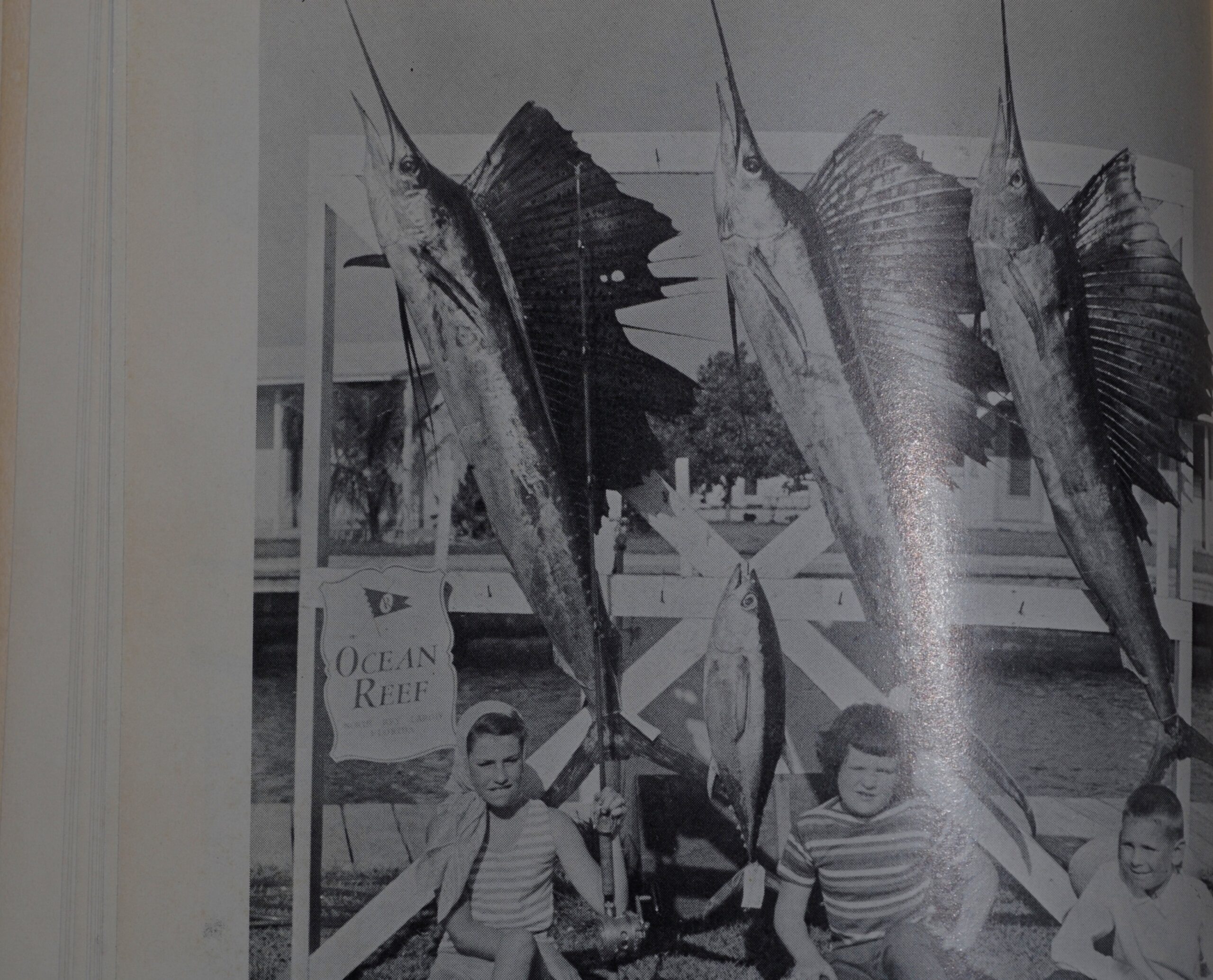
The vibrant success of Florida’s recreational fisheries is not solely due to committed management. Floridians are well aware of the immense value of their recreational fishing and resource stewardship is firmly woven within their social fabric. It’s refreshing – Floridians don’t even think about killing bonefish or tarpon (other than for a rare record opportunity). It’s taboo within their culture. There’s no reason cultural shift to a similar mindset cannot be realized right here in the Northeast for striped bass. We just have to want it . . . The beauty of such a grassroots approach to guardianship is that it’s in our own hands to do so, but, ironically, most folks don’t seem to realize that. Will habitat oversight, protection, preservation and guardrails remain vital to the fate of striped bass? Of course, and forever moving forward. But I believe the recreational community itself is now squarely at the helm with striped bass conservation . . . but they have to want to preserve the fishery.
We can continue to complain or we can be proactive. Rather than standing idle as Atlantic States management drags its heels in taking the right next step, the recreational community can stand up and embrace an obvious means of preserving our striper fishing. It’s in our own hands to do so . . .
The following individuals provided valuable insight and commentary on fisheries management and the conservation culture within their home waters: Pat Abate, Madison, Connecticut, USA; Captain Duane Baker, Tavernier, Florida, USA; Cheryl Bastian, Andros Island, The Bahamas; and Rob French, Newfoundland & Labrador, Canada. Key fisheries data relevant to the state of Rhode Island was generously provided by Sergeant Richard Browning, retired, Charlestown, Rhode Island, USA. Thank you all very much for your time and thoughtful input.